Background
Collaborative working is key to what we do. This case study highlights one of several collaborative research projects with a focus on electric vehicle battery enclosures.
The ALuminium Intensive Vehicle Enclosure (ALIVE) project aims to design, manufacture and test prototype aluminium enclosures that are lighter than current OEM designs. However, where this project differs from the previous ones, is that the novel enclosure designs will provide scalable design and manufacturing concepts utilising agile multi-platform production equipment. The equipment will be engineered to meet variable volume demands, whilst providing kits of parts for export and local assembly.
The Advanced Propulsion Centre (APC UK) part-funded the project, with Constellium UK as the lead partner. The project partners span the aluminium value chain, automotive OEMs and academic institutions. They include BMW, Volvo, Powdertech Surface Science, Expert Tolling & Automation, Warwick Manufacturing Group (WMG), Brunel University and Innoval Technology.
ALIVE started in July 2020 and will conclude in the Spring of 2024.
How we were involved
We have been active across several work packages including equipment design for materials testing, material and component characterisation, testing and analysis. We’re also the practitioners for the Life Cycle Assessment (LCA) of the battery enclosures.
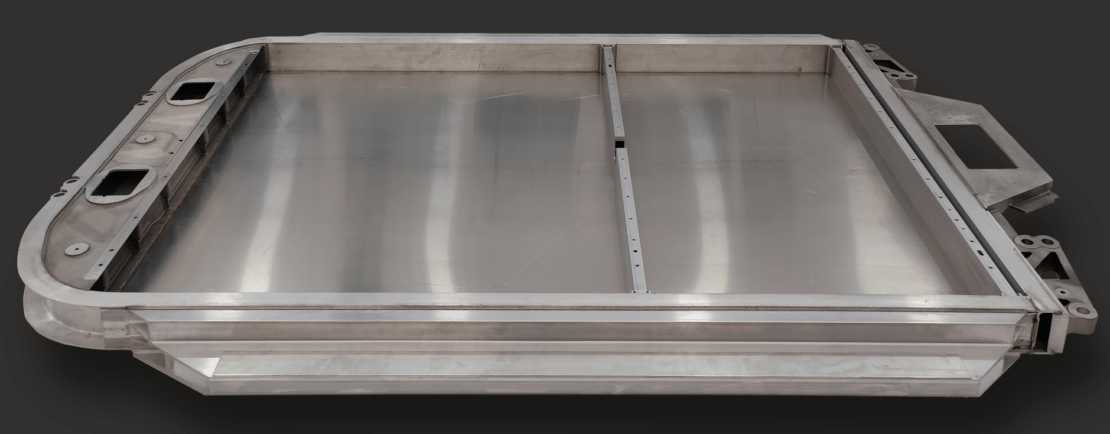
The image shown on the left is an example from the project.
LCA is a quantitative methodology that assesses the potential environmental impact of a product, process or service over its entire life cycle. This includes from the raw extraction of materials (cradle) through to the recycling or disposal of the product at end-of-life (grave). We are leading the LCA study into the multiple aluminium-intensive enclosure designs generated by the ALIVE project.
An important part of the project is to compare the environmental impact potential of the designs to the heavier OEM design, and the alternate steel-intensive enclosure. The resulting impact potentials will highlight areas across the supply chain where it would be possible to reduce the environmental footprint.
LCA is becoming an ever more important method for quantifying potential environmental impact as the need to reduce environmental emissions intensifies. Furthermore, it’s important that we can support with transparent and clear methodology any claims made from the comparison with alternate materials.
Outcome
A panel of expert LCA verifiers will critically review the LCA from the ALIVE study. Importantly, the verifiers will have experience in both the aluminium and steel industries. Upon completion of the study a detailed report will be publicly available which will contain both the methodology and results.
Services Involved
- Life Cycle Assessment
- Materials Characterisation & Testing
Client quote
This short video is from the Cenex Low Carbon Vehicle and Cenex Connected Automated Mobility Show where three battery enclosures were on display. It includes contributions from the three principal partners on this innovative project. You can see Prof. Mike Clinch talking about Innoval’s involvement from 1 minute 30 seconds.